Modular and Prefab Construction in India 2026: The Fastest Way to Build Better, Faster, and Greener

India's prefabricated buildings market is on a trajectory that few sectors in the construction industry can match. Driven by an acute housing deficit of 29 million urban units, ambitious infrastructure timelines, rising labour costs, and a government actively promoting modern construction methods, the prefab construction sector in India is projected to grow significantly through 2030. L&T, Tata Steel's Nest-In, B.G. Shirke, and a growing ecosystem of technology-driven startups are transforming a sector that was once associated with low-quality temporary structures into a mainstream approach capable of delivering high-quality, permanent buildings faster, at lower cost, and with less environmental impact than conventional construction.
For architects and designers, modular construction is not just a procurement strategy, it is a design methodology that demands different thinking from the earliest stages of a project. This guide explains what modular and prefab construction is, the different types and their applications, the key players in India, and what architects and students need to know to work effectively in this rapidly growing sector.
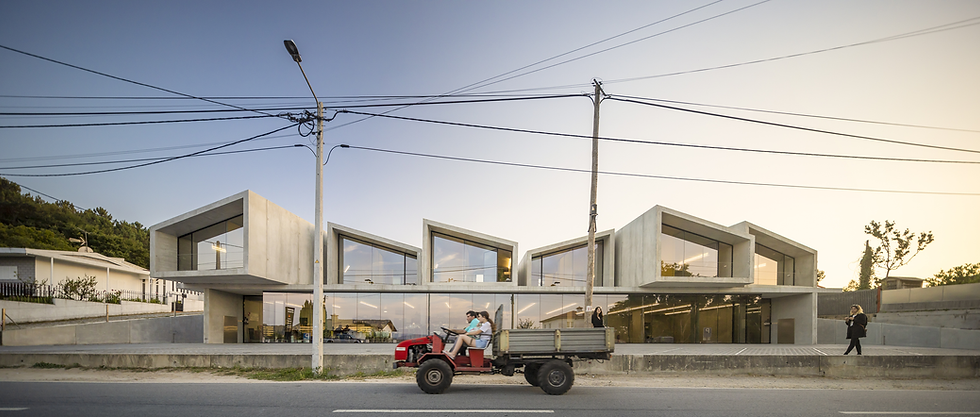
What is Modular and Prefab Construction?
Prefabricated construction refers to any building system in which components are manufactured off-site in a controlled factory environment and then transported to the construction site for assembly. The term encompasses a wide spectrum of approaches, from the prefabrication of individual components (precast concrete panels, structural steel frames) to the factory manufacture of complete volumetric modules, fully finished rooms or building sections that are craned into position and connected on-site.

Precast Concrete
Precast concrete panels, columns, beams, and floor slabs are India's most widely used prefabricated building component. B.G. Shirke has delivered tens of thousands of dwelling units for government housing authorities using precast systems. The technology is mature, the supply chain is established, and the quality is demonstrably superior to in-situ concrete poured in the variable conditions of an Indian construction site.
Pre-Engineered Buildings (PEB)
PEB systems use factory-fabricated structural steel frames with insulated metal cladding panels to create large-span, column-free spaces suitable for industrial, logistics, and commercial buildings. The PEB market in India is growing rapidly, driven by the boom in warehousing, e-commerce logistics centres, and manufacturing facilities under the Production Linked Incentive (PLI) scheme.
Volumetric Modular Construction
Volumetric modules, three-dimensional building units manufactured and finished in a factory, then assembled on-site, are the most advanced form of modular construction and the fastest growing. Tata Steel's Nest-In system and several hospitality-focused modular builders are producing fully fitted modules for hotels, student accommodation, and residential buildings that can be assembled in a fraction of the time conventional construction requires.
Why Prefab is Growing So Fast in India Right Now
Labour shortage: India faces a growing shortage of skilled construction workers. Prefabrication shifts work to factory environments where productivity is higher, quality is more controllable, and fewer workers are needed on site.
Speed: The National Building Code of India estimates modern prefabrication techniques can reduce construction timelines by up to 50%. For developers and government agencies facing urgent delivery deadlines, this is transformative.
PMAY integration: The Pradhan Mantri Awas Yojana housing scheme is actively promoting prefab construction methods to accelerate delivery of affordable housing units at the scale India requires.
Quality control: Factory manufacturing produces components to tighter tolerances than site-based construction, with better quality control and less variability due to weather, supervision, and skill level.
Sustainability: Prefab construction generates significantly less waste than conventional methods, uses materials more efficiently, and enables the use of recycled and sustainable materials in a controlled factory environment.
Design Considerations for Architects Working in Prefab
Designing for prefabricated construction requires architects to think differently from the earliest stages of a project. The constraints and opportunities of modular systems must be understood and designed with, not retrofitted onto a conventionally conceived design:
Standardisation and repetition: prefab economics improve dramatically with repetition. Designs that maximise the use of standard module types and dimensions unlock the full cost and speed benefits of prefabrication.
Transport constraints: volumetric modules must be transportable on public roads. Maximum dimensions are typically constrained by road width, bridge clearances, and vehicle payload limits, which vary by state and route.
Connection design: the joints between prefabricated elements are critical to structural performance, weathertightness, acoustic performance, and appearance. Connection detailing is one of the most technically demanding aspects of prefab design.
Services integration: MEP services (mechanical, electrical, plumbing) should be designed in conjunction with the structural system, not after it. Factory-integrated services are one of the biggest productivity advantages of volumetric modular construction.
Tolerance management: prefabricated components are manufactured to tight tolerances, but site conditions are variable. Designing adequate adjustment, shimming, and grouting capacity into connections prevents expensive problems at assembly.
Prefab and modular construction is one of the fastest-growing areas of practice for Indian architects in 2026, with opportunities spanning affordable housing, hospitality, healthcare, education, and industrial building. At IDEAS Nagpur, construction technology and building systems modules introduce students to prefabricated construction methods as part of our regularly updated, UGC Autonomous curriculum.
Visit ideasnagpur.edu.in to learn more.


The 29 million urban housing deficit shows why prefab matters beyond speed—standardized systems could make delivery more scalable and sustainable. I’ve been comparing modular options using https://viduai.site
The 29 million urban housing-unit deficit shows why prefab construction could be transformative in India, especially with rising labour costs. I’ve been comparing modular building options using https://meshiai.pro/showcase
The 29 million urban housing deficit shows why prefab construction matters beyond speed—especially with rising labour costs. I’m exploring modular planning tools; check out https://flova.pro
The 29 million urban housing deficit shows why prefab construction matters beyond speed—especially with rising labour costs. Curious to see how L&T and Nest-In scale these solutions; check out https://gethookd.site/privacy
The 29 million urban housing-unit deficit shows why prefab needs to scale beyond speed—especially with rising labour costs. India’s mix of L&T, Nest-In, and startups is promising. I’ve been exploring modular building tools lately—check out https://minimax-h3.site/use-cases/e-commerce